
Basic Obedience Training: 5 Essential Cues Every Dog Should Learn

Updated: Sep 4

One of the greatest gifts you can give your dog is the ability to understand what you're asking. Basic obedience training helps build confidence, improves communication, and creates a stronger bond between you and your dog.
At Amy's Mountain Dog Training, we use positive reinforcement and force-free training methods to teach dogs in a fun, rewarding way. Whether you have a brand-new puppy or an older dog that needs a refresher, these five basic cues are the foundation of good manners.

1. The Sit Cue
"Sit" is often the first cue dogs learn. It's simple, useful, and teaches your dog to focus on you.
How to Teach Sit
Hold a treat in your closed hand.
Place your hand in front of your dog's nose.
Slowly move your hand upward and slightly over their head.
As your dog follows the treat, their bottom will naturally lower to the floor.
The moment they sit, say "Sit!" followed by "Good sit!" and reward them with a treat.
Practice several short sessions until your dog understands the movement.
Once they're consistently sitting, begin saying "Sit" before moving your hand. Eventually, fade out the food lure so your dog responds to the verbal cue alone.
Check out the online program for the sit cue: https://www.amysmountaindogtraining.com/challenge-page/premium-sit-program?programId=41d7cba2-ece0-401b-b398-bb8d467eb439

2. The Down Cue
Teaching your dog to lie down encourages relaxation and self-control. It's also a great foundation for longer stays and for settling into public life.
How to Teach Down
Ask your dog to sit.
Hold a treat to their nose.
Slowly move the treat straight down toward the floor.
As your dog follows the treat, their body should naturally lower.
When they're fully lying down, say "Down!" followed by "Good down!" and reward.
Keep practicing until your dog easily follows the lure.
As they improve, begin saying "Down" before using your hand signal, then gradually fade the lure while continuing to reward successful responses.
Remember that every dog learns at a different pace. Stay patient, keep training sessions short, and celebrate each success.
Check out the online program for the down cue: https://www.amysmountaindogtraining.com/challenge-page/premium-down-program?programId=74286f80-d4d4-408e-8cba-19280e0507e6&participantId=undefined

3. The Wait Cue
The Wait cue teaches your dog to pause until released. Unlike "Stay," which asks your dog to remain in one place, "Wait" simply means to stop moving until you give permission.
This cue is especially useful for:
Doorways
Getting in and out of the car
Crossing streets
Waiting for meals
Greeting visitors calmly
How to Teach Wait
Keep your dog on a leash.
Hold your hand up like a stop sign and say "Wait."
Take a small step away.
If your dog stays in place, immediately say "Yes!" and reward.
If they move, calmly guide them back and try again.
Gradually increase the amount of time and distance before rewarding.
Always release your dog with a consistent word like "Okay!" or "Free!" so they know when the exercise is finished.
Check out the online program for the wait cue: https://www.amysmountaindogtraining.com/challenge-page/f31e721f-10e5-4109-b2f5-b3fedf4fe2a8?programId=f31e721f-10e5-4109-b2f5-b3fedf4fe2a8&participantId=undefined

4. The Touch Cue
The Touch cue teaches your dog to touch their nose to the palm of your hand. It's one of the most useful skills you can teach because many dogs find it easier and more enjoyable than the traditional "Come" cue.
Touch is excellent for:
Reliable recalls
Redirecting attention
Moving your dog without pulling
Building engagement
How to Teach Touch
Hold a treat in your open hand.
Present your palm to your dog.
When their nose touches your hand, say "Yes!" or "Good touch!" and reward them..
Once your dog understands the game:
Add a little distance.
Say your dog's name followed by "Touch."
Reward every successful nose touch.
As your dog improves, begin practicing around mild distractions before gradually increasing difficulty.
Check out the online program for the touch cue: https://www.amysmountaindogtraining.com/challenge-page/premium-touch-program?programId=d1e096f8-2dbd-4a04-9f61-5a8b12426992&participantId=undefined

5. The Watch Me Cue
One of my favorite sayings is: "If you have your dog's eyes, you have your dog."
The Watch Me cue teaches your dog to focus on you, even when distractions are nearby. This becomes incredibly valuable during walks, around other dogs, and in busy environments.
How to Teach Watch Me
Hold a treat near your dog's nose.
Slowly move the treat up beside your eyes.
The moment your dog makes eye contact, even for a second, say "Yes!" and reward.
After several repetitions:
Point to your eyes.
Say "Watch Me."
Reward your dog for making eye contact.
Over time, your dog will learn to check in with you whenever they hear the cue.
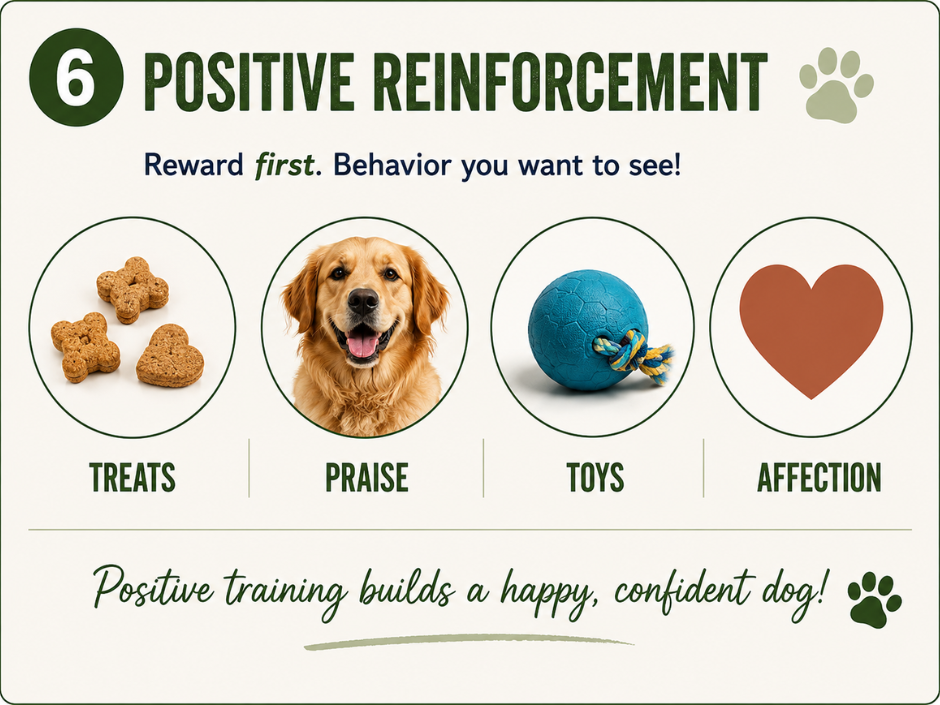

Keep Training Fun
Dogs learn best through short, positive training sessions. Aim for 5-10 minutes several times each day instead of one long session.
Remember:
Reward behaviors you like.
Be patient.
Keep sessions upbeat.
End on a success.
Consistency is far more important than perfection.

Need Help?
Every dog learns at their own pace, and sometimes having a professional trainer makes all the difference.
At Amy's Mountain Dog Training, we offer force-free group obedience classes and private one-on-one training to help you and your dog build confidence together. Whether you're starting with the basics or working through specific challenges, we'll create a training plan that fits your goals.

View our upcoming group classes here:
Looking for personalized help? Our private one-on-one lessons are a great option for dogs that learn best in an individualized setting or for owners who want customized training and flexible scheduling.
Learn more about private lessons here:
We'd love to help you and your dog build a strong foundation for a lifetime of success. Happy training!


Comments