
How to Have a Happier, Calmer Holiday Season 🎄🐾


Looking for holiday dog training tips in Evergreen or Conifer, Colorado? Whether you're preparing for holiday guests, working on jumping and polite greetings, or helping your dog feel more comfortable around distractions, starting early can make the holiday season easier for everyone. With positive reinforcement dog training, you can help your dog build the skills to navigate busy gatherings with more confidence.
The holiday season is a special time filled with family gatherings, festive decorations, delicious food, travel and plenty of excitement. While we look forward to celebrating with the people we love, the holidays can sometimes overwhelm our dogs.
New visitors, unfamiliar environments, changes in routine, tempting food and extra activity around the house can challenge even well-behaved dogs. Some dogs become overly excited when guests arrive, while others feel anxious or uncomfortable around unfamiliar people. Puppies and adolescent dogs may struggle with impulse control, jumping, chewing and listening when distractions are everywhere.
The good news? A little preparation and training before the holidays can make a big difference!
At Amy’s Mountain Dog Training, we believe successful training is about more than teaching obedience cues. It is about building communication, confidence, trust and practical skills that help dogs navigate everyday life.
Here is your holiday prep checklist to help your dog feel more comfortable and set everyone up for a successful holiday season.

🏡 1. Prepare Your Dog for Holiday Guests
One of the biggest holiday challenges is having people come and go from your home. The doorbell rings, people enter carrying bags and gifts, and everyone is excited to see one another. For your dog, this can be a lot to process!
If your dog jumps on guests, rushes through open doors, barks excessively, or becomes overly excited, start practicing these skills before your first holiday gathering.
Practice Sit and Stay
Teaching your dog to sit and stay builds impulse control and gives you a way to communicate what you want your dog to do.
Start practicing in a quiet environment with minimal distractions. Once your dog understands the cues, gradually introduce more challenging situations.
You can practice by:
Asking your dog to sit before opening the front door.
Practicing a short stay while you walk a few steps away.
Rewarding your dog for remaining calm while someone approaches.
Gradually practicing with a family member knocking or ringing the doorbell.
Keep your practice sessions short and positive. If your dog struggles, make the exercise easier before increasing the difficulty.
Want help teaching these skills? Explore these training programs:
Teach Your Dog to Wait at the Door
A dog that rushes the door can create a safety concern for your family, your guests and your dog.
Practice having your dog wait a comfortable distance away from the door while you reach for the handle. Reward your dog for remaining in place, and gradually practice opening the door a little farther.
If your dog gets up, calmly reset the exercise and make it easier. The goal is to teach your dog that waiting patiently pays off.
During actual gatherings, use a leash, baby gate or another appropriate barrier if needed. Don't rely on a training cue alone when your dog might escape.
Work on Polite Greetings
Many dogs jump because they are excited to greet people. Unfortunately, jumping can be uncomfortable or even dangerous for children, older adults and anyone who has difficulty keeping their balance.
Practice rewarding your dog for keeping all four paws on the floor. Ask family members to help by greeting your dog calmly and giving attention when your dog is behaving appropriately.
If your dog is too excited to respond to cues, create more distance and give them time to settle before trying again.
Remember, your dog does not need to greet every visitor. Sometimes the best greeting is a calm one from a little distance!
Teach a Place or Bed Cue
A designated place gives your dog a familiar spot to relax while guests arrive, meals are served or presents are opened.
Start by rewarding your dog for going to their bed or mat. Gradually increase the duration, rewarding your dog for staying there while you move around the room.
Practice with small distractions before adding more challenging situations, such as someone walking past or sitting down nearby.
For particularly exciting gatherings, provide a stuffed food toy, safe chew or other enrichment activity on your dog's bed.
Helpful tip: Make the bed or mat a positive, comfortable place—not a place you send your dog as punishment.
Create a Quiet Retreat
Not every dog enjoys a busy house. Some dogs need breaks from social interaction, noise and activity.
Set up a quiet room or comfortable area where your dog can rest away from guests. Include familiar bedding, water and an appropriate enrichment activity.
Let your dog choose to take a break. If your dog is hiding, repeatedly moving away, panting when it is not hot, or showing other signs of stress, give them space instead of encouraging more interaction.
For some dogs, relaxing in a separate room during the busiest part of a gathering is the kindest and safest option.
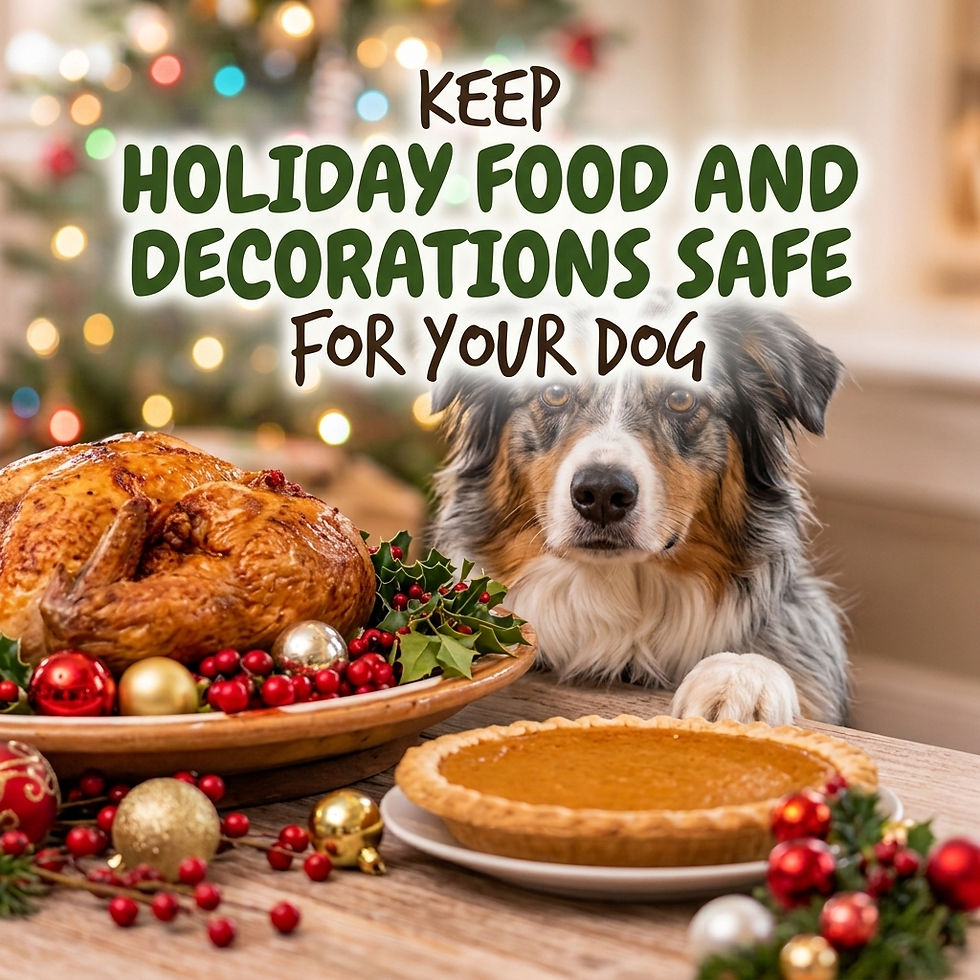
🍗 2. Keep Holiday Food and Decorations Safe
Holiday celebrations often mean extra food on counters, unattended plates, open trash cans and decorations that are new and interesting to curious dogs.
Even well-behaved dogs may be tempted by something they rarely encounter.
Practice Leave It
The Leave It cue teaches your dog to disengage from something tempting and redirect their attention to you.
Start with a low-value item and reward your dog for turning away. Gradually move to more tempting objects while keeping the difficulty level your dog can handle.
Practice with dropped napkins, safe household objects and food distractions that are appropriate for training. Never use dangerous or toxic items as training props.
During holiday gatherings, management matters as much as training. Keep food on counters out of reach, supervise your dog and ask guests not to feed your dog from their plates.
Practice Drop It
Dogs sometimes grab things they shouldn't, including wrapping paper, ornaments, napkins or food that falls on the floor.
Teaching Drop It helps your dog learn to release an object when asked.
Practice by offering a safe toy, saying your cue and rewarding your dog for releasing it. You can often make the exercise easier by offering a treat or another appropriate reward.
Avoid chasing your dog or forcibly grabbing items whenever possible, as this can turn the situation into a game or make your dog more likely to guard what they have.
If your dog picks up something dangerous, prioritize safety. Do not put your hands into your dog's mouth if there is a bite risk. Seek veterinary guidance promptly if your dog may have swallowed something toxic or hazardous.
Be Aware of Holiday Food Hazards
Some holiday foods can be dangerous for dogs. Keep these items securely out of reach:
Chocolate and cocoa products.
Grapes and raisins, including those in baked goods.
Xylitol, a sweetener found in some sugar-free products.
Onions, garlic, and foods containing them.
Alcohol and raw yeast dough.
Cooked bones and fatty food scraps that can cause injury or illness.
Macadamia nuts can also be toxic to dogs. When in doubt, do not share unfamiliar holiday foods with your dog.
If your dog eats something potentially toxic, contact your veterinarian or an animal poison-control service promptly rather than waiting for symptoms to appear.
Make Decorations Dog-Friendly
Christmas trees, dangling ornaments, ribbons, cords and gift wrapping can be very tempting, especially for puppies and dogs who love to chew.
Help prevent accidents by:
Securing your tree so it cannot easily tip over.
Placing fragile ornaments higher on the tree.
Keeping electrical cords and lights out of reach.
Avoiding accessible tinsel, ribbon and string that could be swallowed.
Securing candles, batteries, and small decorations.
Supervising your dog around new decorations.
Training helps, but environmental management is essential. You don't want your dog to have the chance to practice chewing or swallowing something dangerous.

🎁 3. Help Your Dog Feel Comfortable Around Family and Friends
Holiday gatherings can involve people your dog rarely sees, children running through the house, loud conversations and lots of movement.
Instead of waiting until the day of the gathering, practice calm behavior around different people and everyday distractions.
Build Focus and Engagement
Focus means your dog can turn their attention toward you even when something interesting is happening nearby.
Start in a familiar environment by rewarding your dog for voluntarily checking in with you. You can also practice a cue such as “watch me” or your dog's name.
Gradually introduce mild distractions, such as a family member walking across the room or talking while you train.
Reward your dog for checking in, responding to their name and choosing to reconnect with you. Keep enough distance from distractions that your dog can still succeed.
The goal is not to make your dog ignore the entire world. It is to help your dog learn that checking in with you is worthwhile.
Practice Settling While Life Happens
Many dogs can relax when the house is quiet but struggle when people are talking, moving, cooking or eating.
Practice having your dog settle on a bed while you perform everyday activities. Reward calm behavior before your dog becomes overly excited.
Gradually add distractions and increase how long your dog stays settled. If your dog repeatedly gets up, barks, or struggles to relax, reduce the difficulty and work in shorter sessions.
During a real gathering, alternate social time with quiet breaks. A successful holiday doesn't require your dog to stay in the middle of the action all day.
Teach Children How to Interact With Dogs
Children and dogs can develop wonderful relationships, but they need guidance and supervision.
Teach children to:
Let a dog approach them rather than chasing the dog.
Pet gently when the dog is comfortable with the interaction.
Avoid hugging, climbing on, or grabbing a dog's face, ears or tail.
Leave dogs alone while they eat, chew or sleep.
Respect a dog's bed or quiet retreat.
Ask an adult before approaching or petting an unfamiliar dog.
An adult should actively supervise interactions between children and dogs. If an adult cannot supervise, separate them safely.
Watch your dog's body language. Turning away, moving away, lip licking, yawning, a tense body, or suddenly becoming still can indicate discomfort. Give your dog space rather than waiting for them to become more distressed.
Never force your dog to interact with guests. A dog who feels safe and has choices is more likely to cope successfully with a busy environment.

🚗 4. Prepare Your Dog for Holiday Travel
Holiday travel can introduce new challenges, whether you are driving across town or visiting family in another area.
A little practice can help your dog feel more comfortable with car rides, unfamiliar surroundings and changes in routine.
Practice Calm Car Rides
If your dog gets excited or anxious in the car, start with short, manageable sessions before a longer trip.
Practice approaching the car, getting in and settling down. Reward calm behavior and gradually work toward short drives if your dog is comfortable.
For safety, secure your dog using an appropriate crash-tested travel harness or secured travel crate. Never allow your dog to ride loose in the vehicle or sit on the driver's lap.
Never leave your dog unattended in a vehicle when temperatures could become unsafe.
Bring Familiar Items
Familiar smells and routines can help your dog adjust to a new environment.
Consider packing:
Your dog's usual food and treats.
Familiar bedding or a blanket.
Favorite toys and appropriate chews.
Food and water bowls.
A leash, harness and backup leash.
Waste bags and any necessary medications.
Identification and current contact information.
Maintaining your dog's usual feeding and bathroom schedule as much as possible can also help reduce stress.
Practice Walking in New Environments
Visiting a new home or unfamiliar town can expose your dog to new sounds, people, dogs and smells.
Practice walking in a variety of safe environments before your trip. Reward your dog for checking in with you, walking on a loose leash and responding to familiar cues.
Choose quieter areas if your dog becomes overwhelmed. You do not need to take your dog into the middle of a crowded holiday event to help them learn.
If your dog is uncomfortable around unfamiliar dogs, avoid forced greetings and crowded dog areas.
Keep Identification Updated
Before traveling, check that your dog's identification tags have current contact information and that their microchip registration is up to date.
Keep your dog's leash attached before opening car doors, and be especially careful when entering or leaving unfamiliar homes.
Even a normally reliable dog may become disoriented or frightened in a new environment.

🐾 5. Keep Up With Exercise, Enrichment and Routine
The holidays can disrupt normal schedules. Walks may be shorter, feeding times may change, and visitors may take up much of your attention.
However, your dog's physical and mental needs do not disappear just because life gets busy.
Try to maintain a predictable routine that includes:
Regular meals and bathroom breaks.
Age- and health-appropriate exercise.
Short training sessions.
Opportunities to sniff and explore.
Food puzzles or other safe enrichment activities.
Plenty of rest and uninterrupted sleep.
Mental enrichment can be especially helpful on busy days. Sniffing games, food puzzles and short training sessions give your dog chances to use their brain without a long or overstimulating outing.
Remember that more exercise isn't always the answer to overexcitement. Some dogs become even more wound up when they are overtired or overstimulated. Balance activity with rest and opportunities to settle.

📅 6. Start Practicing Before the Holidays
One of the biggest mistakes dog owners make is waiting until guests arrive to work on their dog's manners.
Dogs need time to learn new skills, practice them in different environments and build confidence around distractions.
Start with a few minutes of training each day. Focus on one or two skills at a time, and gradually increase the difficulty as your dog becomes more successful.
For example, your preparation plan might look like this:
Week 1: Build the basics
Practice Sit, Stay and Leave It.
Begin teaching a place or bed cue.
Reward calm behavior around the house.
Week 2: Practice everyday distractions
Work on waiting at doors.
Practice polite greetings with familiar people.
Build focus while someone walks around or talks nearby.
Week 3: Add holiday scenarios
Practice settling while family members visit.
Work on Drop It with safe toys.
Gradually introduce decorations while supervising your dog.
Week 4: Prepare for the real event
Practice short visits with trusted friends or family.
Set up your dog's retreat area.
Plan how you will manage arrivals, meals, children and quiet breaks.
Adjust this timeline to your dog's needs. Some dogs may need several weeks or months to feel comfortable with particular situations. For dogs who are fearful, reactive or struggling with significant anxiety, work at a pace that keeps them comfortable and seek professional support when needed.
The goal is progress, not perfection!

🐶 7. When to Get Help From a Professional Dog Trainer
Sometimes holiday challenges go beyond a few basic manners.
You may need additional support if your dog:
Jumps on people and is difficult to redirect.
Pulls hard on the leash, making walks challenging.
Barks, lunges or reacts to people or other dogs.
Struggles to settle when visitors arrive.
Becomes anxious or fearful around unfamiliar people.
Grabs food or objects and won't let go.
Has difficulty focusing around everyday distractions.
Professional training can help you identify what drives your dog's behavior and create a plan tailored to your household, your dog's personality, and your goals.
At Amy's Mountain Dog Training, we use positive reinforcement and force-free methods to help dogs and their people build better communication, confidence and lasting skills.
Private dog training lessons can be customized to your specific holiday challenges, including door manners, jumping, settling, impulse control, loose-leash walking, focus around distractions and appropriate greetings.
We can practice the situations that matter most to you and help you develop a plan you can use long after the holidays.
Whether you have a young puppy learning the basics or an adult dog who needs help navigating a busy household, it is never too late to work toward a calmer, more enjoyable routine.

❤️ Most Importantly, Make Your Dog's Well-Being a Priority
A successful holiday doesn't mean your dog has to greet every guest, join every activity or behave perfectly in every situation.
It means understanding your dog's needs, setting them up for success and providing the support they need to feel safe and comfortable.
Some dogs thrive in a lively home. Others are happiest enjoying a quiet afternoon in their own space. Both are perfectly okay!
Plan ahead, practice the skills that will help your dog most, and celebrate small improvements along the way.
A little training now can make for a calmer holiday season—and a stronger bond with your dog all year long!
🎄 Ready to Prepare Your Dog for the Holidays?
Amy's Mountain Dog Training offers positive reinforcement training to help you and your dog navigate everyday challenges with confidence.
From foundational cues and polite greetings to focus, impulse control and real-world manners, we can help you create a training plan that fits your dog's needs.
Contact Amy's Mountain Dog Training to learn more about private lessons and upcoming training opportunities.
Let's make this holiday season a little calmer, a little safer and a lot more enjoyable for you and your dog! 🐾💚


Comments